A Decade in the Dark: Six Britons on the Disposable Cameras They Finally Had Developed
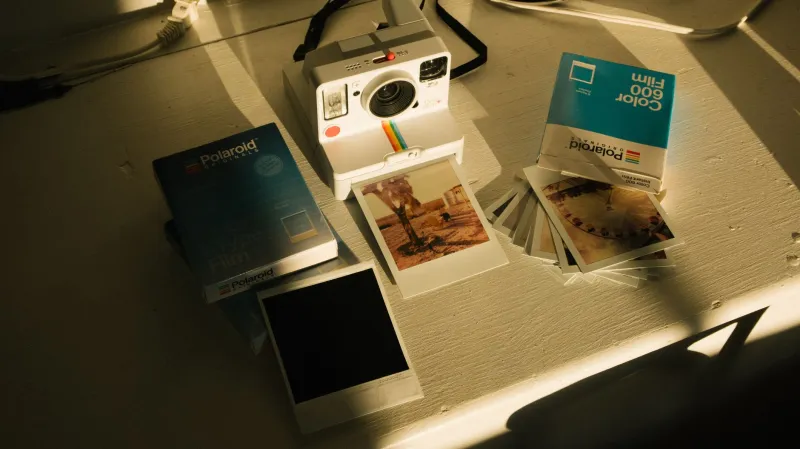
There is a particular kind of British archaeology that happens in drawers. Not the grand sort with trowels and grid squares, but the quiet rummage through a kitchen drawer at 9pm, past the takeaway menus and the dead batteries, until your hand closes around a chunky plastic rectangle you last saw at a wedding, a festival, or somebody’s leaving do. A disposable camera. Still sealed. Still full of something.
In 2026, when every phone holds thousands of photographs and most of us scroll past our own lives at speed, the disposable camera has become a strange little time capsule. You cannot check the back of it. You cannot delete the bad ones. You have to wait, pay somebody, and then hold a paper envelope of maybe-prints like a child with a school report.
I put out a call for people who had finally taken theirs to be developed. Six replied. These are their rolls of film, and the ordinary British moments that waited in the dark.
Priya, 34, Bristol: ‘I thought it was a big night out. It was toast.’
Priya found her camera in an old handbag during a clear-out before a house move. She guessed it was from a friend’s birthday in 2015. ‘I remembered this huge night,’ she says. ‘Loud bar, lots of dancing, somebody crying outside a kebab shop. The usual.’
The prints told a different story. There were two photographs of the bar. The rest were of her old flatmate making toast at 2am, the kitchen wall with its awful yellow tiles, and a bus stop on a wet Tuesday morning. ‘I had completely rewritten the night,’ she says. ‘The actual memory was smaller and kinder. We went home, we ate toast, we talked rubbish. I looked at the toast photo for ages.’
She says the delay made her trust the pictures more. ‘On my phone I’d have taken forty and picked the one where I looked good. This was just what happened. The yellow tiles. The butter. My friend’s hand in the frame. It felt like evidence of a life rather than a performance of one.’
Tom, 41, Leeds: ‘The dog was young. I’d forgotten that.’
Tom’s camera had been in his glovebox since roughly 2014. He assumed it was empty, or broken, or full of pictures of a car park. Instead, the lab returned a roll of his old dog, Nell, on a beach in North Yorkshire. ‘She died in 2019,’ he says. ‘In my head she was always old. Slow. A bit stiff. But these photos show her sprinting at the sea like a lunatic, ears flying.’
There is also a shot of his partner laughing with her head thrown back, and one of a thermos flask on the car bonnet. ‘I don’t remember taking any of them,’ Tom says. ‘That’s the odd bit. They’re my photos but they feel like somebody else’s holiday.’ He pauses. ‘It’s not sad, actually. It’s a relief. I’d been carrying the end of her life around. The camera gave me the middle back.’
Elaine, 58, Norwich: ‘Not Christmas. A garden centre.’
Elaine was convinced her camera was from a family Christmas in 2009. The first prints were indeed tinsel and paper hats. But the rest were from a garden centre in February: her mum in a padded coat, holding a tray of pansies, squinting into the sun. ‘Mum died in 2017,’ Elaine says. ‘I thought I had no photographs of her just being ordinary. Every picture I had was an occasion. Birthday. Christmas. Somebody’s anniversary.’
These were not occasions. They were a Tuesday. Her mum had bought a bird feeder and complained about the price of bulbs. ‘I sat in the car park and cried,’ Elaine says. ‘Not because it was tragic. Because it was so normal. She was just there, in her coat, being my mum. I’d forgotten the exact way she held her handbag on her arm.’
The camera had been in a loft box marked ‘spare cables’. Elaine has since bought two more disposables. ‘I’m not trying to be arty,’ she says. ‘I just want more Tuesdays.’
Marcus, 29, Glasgow: ‘The boy who moved away.’
Marcus’s camera came from a school trip to Edinburgh in 2011. He expected blurry monuments and somebody’s thumb. What he got was a train carriage full of fifteen-year-olds pulling faces, a can of Irn-Bru on a table, and a boy called Jamie whom he had not thought about in years. ‘He moved to Canada,’ Marcus says. ‘We said we’d keep in touch. We didn’t, because we were fifteen.’
One photo shows Jamie mid-laugh, half out of frame. ‘I remembered him as cooler than me,’ Marcus says. ‘In the photo he looks just as awkward as everyone else. It made me realise that all that teenage hierarchy stuff was nonsense. We were all just kids on a train.’ He found Jamie on a messaging app afterwards. They exchanged three messages and a photo of the print. ‘It was enough,’ Marcus says. ‘It was a nice full stop.’
Sophie, 37, Cardiff: ‘The wedding was not the point.’
Sophie’s camera was from her sister’s wedding in 2018. She remembered taking pictures of the first dance and the cake. The lab returned one photograph of the cake. The other twenty-three were of the morning: bridesmaids in dressing gowns, somebody curling hair, a plate of bacon sandwiches, her dad ironing his shirt while watching television.
‘I’d built the wedding up in my head as the big day,’ Sophie says. ‘But the photos were all about the waiting. The nervous energy. My sister sitting on the edge of the bath, not saying anything.’ She laughs. ‘There’s one of a half-eaten croissant that I cannot explain. I have no memory of that croissant. But I’m glad it’s documented.’
Sophie thinks the photos are more honest than the professional album. ‘The album is beautiful. It’s also a bit like a brochure. These are messy and badly lit and they smell faintly of Boots. They feel like us.’
Dev, 45, Birmingham: ‘My dad’s shop, before it changed.’
Dev’s camera had been in a kitchen drawer for eleven years. He thought it was from a cousin’s engagement party. Most of the film was, but the last six frames were of his father’s corner shop: the counter, the sweet rack, the hand-written sign for newspapers, his dad in a cardigan doing the crossword.
‘The shop was sold in 2016,’ Dev says. ‘I drive past it sometimes. It’s a vape shop now. You forget the details. The exact colour of the lino. The way the bell above the door sounded. The photos don’t have sound, obviously, but looking at them I could hear it.’
He says the delay gave him permission to look properly. ‘If I’d seen these the week after, I’d have thought, oh yeah, the shop. But ten years later, they’re not just photos. They’re a record of a thing that doesn’t exist anymore. My dad is eighty now. He looked at them and said, “God, that counter was always sticky.” That was his whole review.’
The envelope on the table
All six described the same small ritual: opening the paper envelope, flicking through the prints, turning them over to see if anything was written on the back. Most weren’t. The ones that were had a date, or a name, or a single word like ‘beach’ or ‘tea’.
What struck me is how little any of them cared about the quality. The photos were grainy. Some had a finger over the lens. One was entirely of a pavement. They loved them anyway. Maybe because a disposable camera does not let you curate the moment while you are in it. It just takes what is there, and then it waits.
If you have one in a drawer, glovebox, or old handbag, this is your nudge. It might be nothing. It might be a dog running at the sea, or a parent buying pansies, or a half-eaten croissant. Either way, it happened. It is worth seeing.