The Ones on Till Duty: Britain’s Corner-Shop Animals and the Art of Knowing Everyone
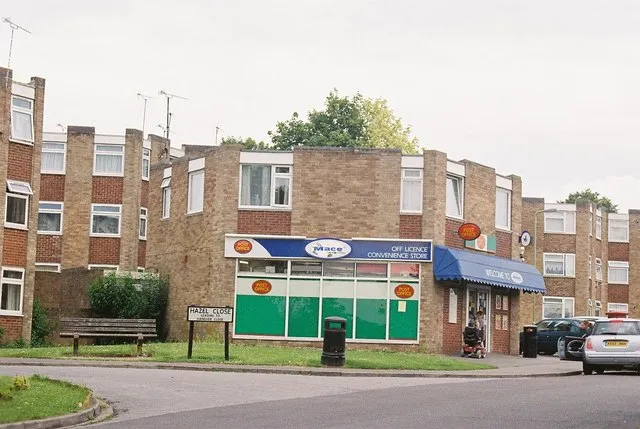
Photo: Chris Downer, CC BY-SA 2.0, via Wikimedia Commons
There is a particular sound a corner shop makes when the animal is in. Not the door chime, not the fridge hum, but the small pause before someone says hello. A regular comes in, spots the cat asleep on the stack of newspapers, and visibly softens. The shoulders drop. The day gets about ten per cent more manageable. In 2026, when so much of shopping has been flattened into a self-checkout screen and a blue bag for life, that pause feels less like decoration and more like infrastructure.
I spent a wet Tuesday and a bright Thursday visiting small shops across England to talk about the animals who unofficially run them. Not the ones in glossy adverts. The real ones: the cat with a bed behind the till, the dog who knows the postie’s van by its engine, the terrier who has strong opinions about the sandwich fridge. What I found was not a story about cute pets. It was a story about who gets remembered, who gets checked on, and how a neighbourhood keeps its head above water.
The cat who files complaints
Asha runs a family newsagent in Leicester. Her cat, Biscuit, is eleven, grey around the muzzle, and — in Asha’s words — “the real manager”. Biscuit has a blanket on the counter, a water bowl by the lottery stand and a habit of sitting directly on the Radio Times. Customers move him. He moves back. It is a ritual.
“People come in for milk and end up telling me about their hip operation,” Asha says. “Biscuit makes it allowed. If you’re talking to a cat, you’re not complaining. You’re just chatting.”
That distinction matters. Asha has noticed that since the shop started opening earlier last year, the first hour is less about newspapers and more about company. The same six or seven faces drift in before work. Biscuit gets a chin scratch. Asha gets the real news: who’s poorly, whose son is home from university, which bus has gone missing again.
There is a practical side, too. Biscuit once sat on the till during a attempted shoplift and stared at the teenager until he put the crisps back. Asha still tells that story like it is a medal. “He didn’t shout. He didn’t chase. He just looked. That cat has more authority than I do.”
The dog who knows the school run
At a Londis in south Bristol, the shop dog is called Nell. She is a scruffy lurcher with one ear permanently folded back, and she has a strict timetable: 8.15am, school run; 3.20pm, school run again; 4pm, the man who buys one banana and a scratchcard. Nell does not greet everyone with the same energy. She has a system. Children get a tail wag. Adults with headphones get a polite nose. The postie gets a full vocal welcome, as though he has been away at sea.
Tom, who took over the shop four years ago, says Nell was supposed to be a temporary arrangement while his partner was between flats. “That lasted about a fortnight. Now she has a bed under the postcard stand and a tin of treats with her name on it. Customers bring them in. We haven’t bought a treat since 2023.”
What Nell does, Tom says, is slow people down. The shop is on a busy road, two minutes from a primary school. At pick-up time, parents who would otherwise be scrolling on their phones stop by the door and let their children say hello. It is a tiny social lubricant. “You can’t underestimate how much people need a reason to talk to each other that isn’t about money or problems,” Tom says. “A dog is a very good reason.”
He also admits Nell is a useful early warning system. She knows when someone is going to ask for something complicated, like a parcel return or a lottery claim. “She gets up and goes behind the counter. She’s not daft.”
The rituals that keep a high street ticking
Not every shop animal is a natural extrovert. Margaret runs a small post office and shop in Whitby with a black cat called Sooty who — and this is said with affection — “has the social skills of a wet Monday”. Sooty hides when the door goes. But he appears at 4pm, like clockwork, for his tea. The regulars know this. They plan their visits around it.
“He doesn’t like people,” Margaret says. “But he likes the routine of people. And people like the routine of him. It’s a mutual arrangement with very little actual contact.”
That, perhaps, is the real lesson. Britain’s corner-shop animals are not there to be adorable all day. They are there to be present. They occupy a small, unglamorous role: the living thing in the room that reminds you this is a place where someone knows your name, or at least knows that you take two pints of semi-skimmed and a Daily Mail.
In a year when high streets are still being patched together with pop-ups, parcel lockers and community fridges, the shop cat is not a solution to anything. They do not fix business rates. They do not stop the bank from closing. But they do something subtler. They make a shop feel held. They turn a transaction into a visit. They give the woman who lives alone a reason to say good morning to something that might, if she’s lucky, blink back.
What they actually cost
I asked every shopkeeper the same question: what does the animal cost you? The answer was always a variation on the same theme: a bit of money, a lot of worry, and absolutely no regrets. Asha spends £9 a week on Biscuit’s food and has spent more than she cares to admit on vet bills. Tom has a laminated sign on the door that says “Please do not let Nell out” in three different fonts. Margaret once closed the post office for forty minutes to take Sooty to the vet, then reopened with a handwritten note apologising for the delay.
None of them described the animal as a gimmick. They described them as a colleague. Sometimes a useless one. Sometimes the only one who never complains about the rota.
“He’s not staff,” Asha says of Biscuit. “He’s more like a mood. A good mood with claws.”
The small, unpaid work of being known
The last shop I visited had a sign on the door: “Dog treats available on request. Please ask the dog.” Behind the till, a small terrier called Pip was asleep in a basket of reduced-price bread. The woman serving me did not look up from the lottery machine. “He’s on his break,” she said. “He’s been on his break since 2019.”
I bought a paper and a packet of custard creams. On the way out, Pip opened one eye. I said thank you. He went back to sleep. It was, in the grand scheme of 2026, a very small exchange. But it was also the whole point: a shop where someone — even the animal — acknowledges you exist. In a country of self-service checkouts and automated phone lines, that is not nothing. It might be the best thing on the high street.