Six Unmanned Tables, One Fiver and the Small Faith We Keep in Each Other
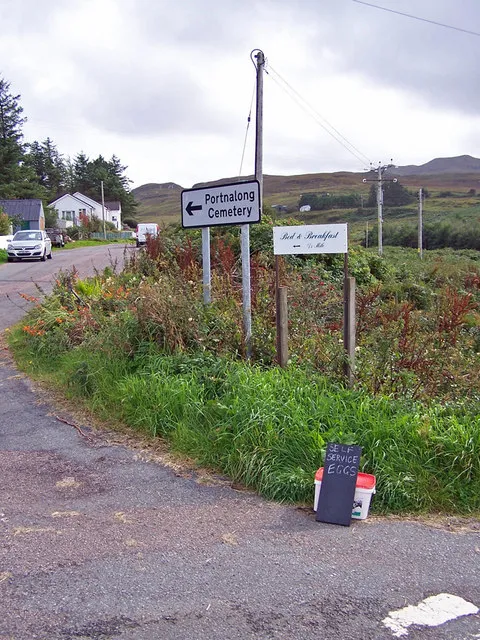
Photo: Richard Dorrell, CC BY-SA 2.0, via Wikimedia Commons
The first thing you notice is not the eggs. It’s the tin. A biscuit tin, usually, or a jam jar with a slit cut in the lid, sitting on a gate table beside a handwritten sign that says something like: ‘£2.50 half dozen. Correct change appreciated. Thank you.’ Nobody is there. The lane is empty. The only sound is a pheasant doing its odd, rusty-door impression somewhere behind the hedge.
In 2026, when so much of daily life has been flattened into an app, the roadside egg stand remains gloriously analogue. You turn up. You open the cool box. You take your eggs. You put your money in the tin. You close the lid. And off you go, carrying six eggs and a small, unspoken agreement.
I spent a week visiting six of them — from a rickety gate table in Devon to a purpose-built shed in the Yorkshire Dales — to ask farmers, regulars and the occasional baffled passer-by what these unstaffed little shops are really for. The eggs, it turns out, are only half the story.
The Gate Table That Started It
On a grey Tuesday in November 2026, I pull up on a single-track lane near Dartmoor. The stand is not much more than a pallet balanced on two milk crates, with a plastic tub of eggs and a tin that has ‘EGGS’ written on it in marker pen. The sign is a piece of cardboard, slightly warped by rain.
Beth, who runs the smallholding up the track, tells me she started leaving eggs out during the first lockdown and never stopped. ‘It was a way of not having to answer the door,’ she says. ‘Then people started leaving notes. Not just money. Notes. “Lovely eggs, thank you.” “Sorry, only had a tenner.” “Back next week.” It became a bit of a diary.’
She says she has never had the tin short. Not once. There have been odd moments — a £20 note for a £2.50 box, a bag of apples left in lieu of 50p — but the arithmetic has always worked itself out. ‘I think people are more honest when nobody’s watching,’ she says. ‘Or maybe they’re just more honest when it’s eggs.’
A Shed With a Light On
Two hundred and fifty miles north, in the Yorkshire Dales, the setup is altogether more committed. A wooden shed, painted green, with a strip light, a shelf of egg boxes and a small ledger book. The sign says: ‘Eggs £3. Please write what you took. Change in the tin.’
It is the ledger that gets me. Names, dates, amounts, the occasional ‘IOU — back Saturday’. One entry reads: ‘Took 2 dozen, left £6, borrowed a pencil, sorry.’ Another: ‘Paid £5, took £3.50 — left the rest for the next person.’
Farmer Alan, 68, says the ledger began as a way of keeping track when he wasn’t around. Now it is something else. ‘It’s a record of the village,’ he says. ‘You can see who’s been poorly because they haven’t been down. You can see when the grandkids visit. It’s not a shop. It’s a noticeboard that happens to sell eggs.’
A regular customer, Priya, tells me she walks down every Saturday with her daughter. ‘She’s seven. She does the money. She counts it out and puts it in the tin. It’s the only place she’s allowed to handle cash. I like that she’s learning that trust is a thing you do, not a thing you say.’
The Coolbox With Two Ways to Pay
Not every stand is a shed. In Norfolk, I find a coolbox strapped to a farm gate with a laminated sign: ‘Eggs £2.80. Cash in tin. Card via QR code if you must.’ The ‘if you must’ feels very Norfolk.
The farmer, Martin, says the QR code was his son’s idea. ‘He said nobody carries cash anymore. I said nobody round here wants to scan a code for a box of eggs. Turns out we were both right.’ He reckons about a third of people pay by card now, but the tin still fills up. ‘The card payments go to the farm account. The tin money goes in a jar for the air ambulance. People know that. I think it makes them round up.’
A passing walker, Janet, stops to buy a box and confesses she once took eggs without the right change. ‘I only had a tenner. I put it in the tin and thought, well, that’s that. Next week I came back and there was a note taped to the box: “Janet — you overpaid. Take a box on us.” I nearly cried. It’s just eggs. But it’s not, is it?’
What Happens When the Tin Comes Up Short
I ask every farmer the same question: what happens when someone short-changes the tin? The answers are surprisingly uniform. Mostly, they shrug. Sometimes they notice. Occasionally they mind.
In Herefordshire, a stand built into an old wardrobe frame has a small chalkboard that reads: ‘If you’re short, pay next time. If you’re flush, pay it forward.’ The farmer, Ellen, says she has found IOUs written on receipts, bus tickets and once a piece of wallpaper. ‘People want to make it right,’ she says. ‘That’s the bit that gets me. They could just not come back. But they come back.’
In Essex, on the edge of an allotment site, the stand is a plastic storage box with a slot cut in the lid. It is the most urban of the six, and the most heavily used. The sign is blunt: ‘Eggs £2. No change. Don’t rattled the tin.’ I ask a regular, Tom, whether he has ever seen anyone take eggs without paying. ‘Once,’ he says. ‘A bloke in a hurry. But then he came back the next day and put a fiver in. Didn’t say anything. Just nodded.’
The Quiet Rules Nobody Writes Down
There is a code to these stands, and it is rarely written down. Take the right number of eggs. Leave the right money. Don’t take the tin. Close the lid. Don’t let the dog cock its leg on the sign. If you’re the last one, don’t take the last box unless you’re desperate. If you’re desperate, take it and leave a note.
In the Scottish Borders, I visit a stand beside a farm track where the eggs are kept in a little wooden cupboard with a latch. The farmer, Isla, tells me the rules are mostly about respect. ‘It’s not about the money,’ she says. ‘It’s about the fact that somebody left this out for you. That’s a kind of manners. You don’t have to be grateful. You just have to not ruin it.’
A baffled passer-by, a man called Douglas who has stopped to ask for directions, sums it up better. ‘So you just… take them and leave the money?’ he says. ‘And nobody’s here?’ He looks at the tin, then at the eggs, then back at the tin. ‘That’s mad. That’s brilliant. That’s mad.’
A Small Faith, Kept Daily
By the end of the week, I have bought more eggs than one person can reasonably eat and had the same conversation six times. The details change — the shed, the coolbox, the wardrobe, the pallet — but the shape of it doesn’t. A small, unstaffed table. A handwritten sign. A tin. A quiet assumption that most people, most of the time, will do the decent thing.
It would be easy to dress this up as a grand statement about Britishness, or community, or the human condition. But the people running these stands are refreshingly unsentimental about it. They are not running a social experiment. They are selling eggs. The trust is not a philosophy. It is a practical arrangement that happens to make them feel a bit better about the world.
Still, there is something in it. In a year when so much feels mediated and monitored, the honesty box asks for something old-fashioned and slightly brave: your word. No receipt. No CCTV. No app. Just a fiver in the tin and a box of eggs on the passenger seat.
As I drive home, I realise I have been short-changed exactly once — by 20p — and I didn’t notice until I got back to the car. I could let it go. But I know I’ll be back that way next month. I’ll put 20p in the tin and maybe a note. Something like: ‘Sorry. Back next week.’ Because that’s the rule, isn’t it? Not the one on the sign. The one we keep anyway.