The Sellotaped Address Book and the Cards That Never Get Sent: Eight Kitchen Tables in December
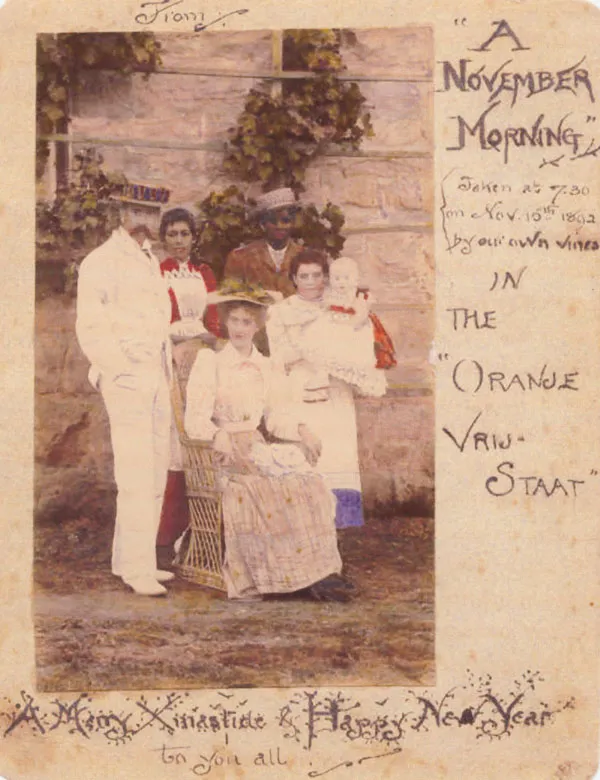
Photo: Mabel Tolkien (née Suffield, 1870 - 1904), Public domain, via Wikimedia Commons
There is a specific sound an address book makes when you open it in December. A dry little crack, like a spine remembering itself. Then the smell of old paper and whatever pen was last pressed against it, and then the sight of a page half in biro, half in pencil, with three postcodes stacked on top of each other like a game of sentimental Jenga.
I have one. It lives by the phone, though nobody under forty understands why a phone needs a companion. Every year I open it with the intention of being a better person, and every year I write about nine cards and feel quietly guilty about the other forty.
So this month I asked eight households across Britain to let me sit at their kitchen tables while they did theirs. Not to judge the handwriting. Just to see what the ritual is actually for.
The Book Held Together With Sellotape
Doreen, seventy-eight, has an address book from Stockport that is more repair than book. There is sellotape down the spine, a rubber band holding the back section in, and a small pencilled note on the inside cover that reads do not lend.
"I've had that since the children were small," she says, flattening a card on the table — a robin, slightly glittery, bought in a pack of twenty from a garden centre in October. "Half the people in it are dead. I don't cross them out. I just skip the page and say good morning as I go past."
She writes about eleven cards now. She used to write sixty. What she misses is not the volume but the post: the walk to the pillar box, the little satisfaction of hearing the flap close.
"I still do that," she says. "Even in the rain. Otherwise what's the point of me being the one who remembers?"
The Crossed-Out Ones
Tom, twenty-nine, is a joiner in Sheffield with a shelf of half-finished cards and a spreadsheet on his phone. Yes, a spreadsheet. He started it in 2021 after losing track of who had moved in with whom, and now it has colour coding.
"My mum writes cards to people she hasn't seen since 1998," he says. "I don't have the stamina for that. But I do have the address book, which is mostly crossed-out flats in Leeds."
The joke is that the spreadsheet never quite matches the paper. Every year, three addresses are wrong. Every year, one old housemate gets a card intended for a different old housemate. He has come to rather like the mistakes.
"It's a silly way of saying I still know where you live," he says. "Or near enough."
The Round Robin Honesty Problem
Helen and Geoff, in Norwich, have been writing a joint letter since 2004. It began with a joke about the boiler and has since become a small annual publication, folded into every card, one side of A4, both sides if there has been a wedding.
"The temptation is to make it sound like we live in a brochure," says Helen. "So we put in the boring bits. The dental appointment. The fence. One year Geoff wrote about the price of a stamps in a way that made his aunt ring us."
The best round robins, she thinks, are the ones that admit the year was largely fine and unremarkable. The worst are the ones that read like a job application for a better life.
"I don't want to hear about your kitchen island," she says, kindly. "I want to hear that you've had a cough since March and you're sick of it."
The Card Box From the Charity Shop
Cath, forty-three, in Swansea, buys her cards second-hand. Not out of thrift, though that helps. Out of a strange delight in writing to her friends on cards that were clearly intended for someone else in about 1986 — a snowy church, a cartoon dog in a scarf, a robin with slightly accusing eyes.
"My best find was a box of forty for a pound, still with the cellophane," she says. "Some of them had been written on in pencil and rubbed out. You could still see the ghosts of names."
She writes about thirty cards now, mostly people she would text anyway. The card is not the message. The card is the willingness to go and find a pen.
"I do think it's quite nice that you can't 'like' a Christmas card," she says. "You have to read it and then put it on a shelf and feel a bit awkward about throwing it away in January."
The Ones That Never Get Sent
Aisha, thirty-six, in Birmingham, has a tin of unsent cards. Beautiful ones. Letterpress, no less. Bought in a fit of December optimism and never inscribed, because she could never work out what to write that wasn't just hi, sorry I've been rubbish.
"There's about twelve in there," she says. "I bought them the year my dad was ill and I thought, right, I'm going to be a person who sends cards. Then January happened."
She has a rule now: no card unless she can write three sentences that are true. That usually means an admission, a small piece of news and a question that genuinely wants an answer.
"It doesn't need to be elegant," she says. "It needs to not be a lie about how busy I am."
The Long Haul
Fiona, fifty-four, lives near Inverness and writes to a friend in New Zealand every year without fail. There is no other contact between them. No messages, no phone calls. One card, once a year, in a big envelope with a proper letter inside.
"We were at university together, then she moved, then life happened," she says. "The card is the whole friendship now. But it's a real friendship. It just fits in one envelope a year."
She has an address book with only nine entries. She finds this reassuring. Her sister has four hundred contacts and no idea where anyone lives.
"You don't owe everyone a letter," she says. "But you owe someone one. Otherwise it's just admin, isn't it."
The Converted
Dan and Priya, in Bristol, started writing cards in 2020 because they were bored. They have kept it up, largely because their four-year-old now insists on drawing on the envelopes, which means nobody receives anything clean.
"Our cards look like they've been through a war," says Dan. "But people keep them. My uncle has a photo of last year's on his fridge. That's more than he's ever done with a text."
They buy a box in November. They use about a third. The rest get put away for a year and then put away again, in a small ceremony of good intentions.
What It's Actually For
None of the eight people I spoke to thought they were preserving a great tradition. They all seemed faintly embarrassed to be doing it, and slightly pleased too. The card is a small, low-stakes, slightly awkward act of remembering. It is not a performance of closeness. It is a little match struck in the general direction of someone you'd otherwise have let go.
If you photographed these tables, you would see the same four things: a mug, a pen that might work, an address book held together with hope, and a pile of cards that need stamps. You would also see a chair pulled out for someone who isn't in the room.
That's why I keep doing mine. Not because I'm organised. Because it's the one bit of December admin that is actually about people.
And yes, I still have cards from last year in a drawer. I'll do those next week.