Pricing My Own Past: What I Learned Selling Old Sketchbooks for £1 at a Sunday Car Boot

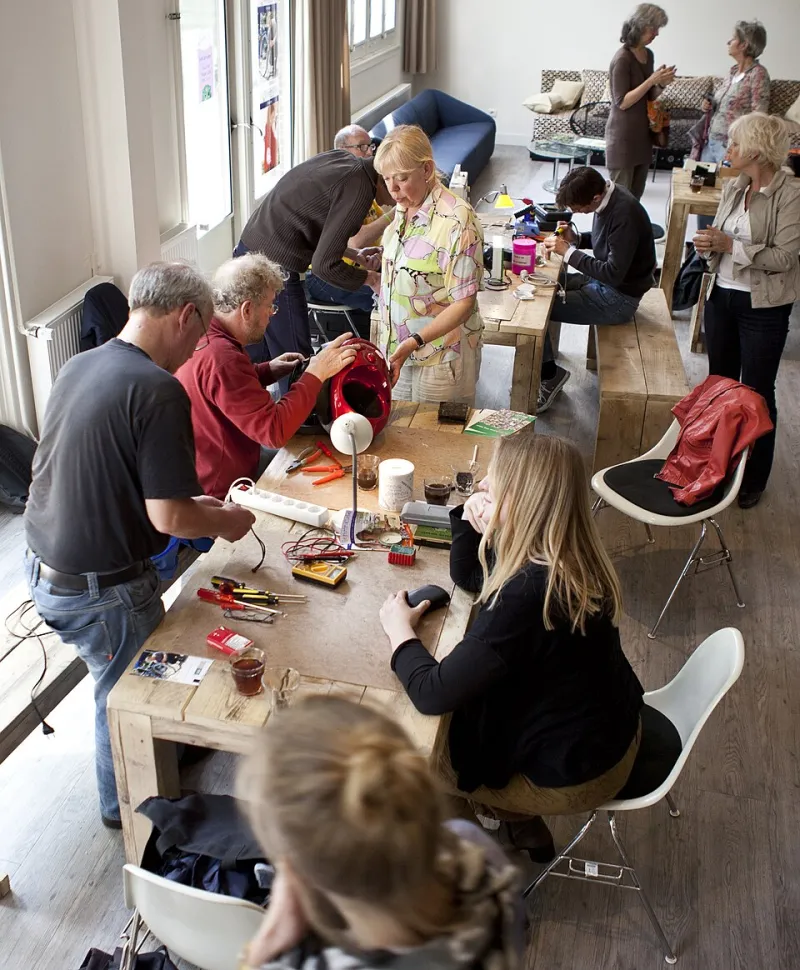
Photo by Photo by Euronewsweek Media on Unsplash on Unsplash
It was 6.07am and I was standing in a field, holding a folding table and a flask, watching a man in a head torch buy a printer for a fiver. This is the car boot sale economy: arrive in the dark, sell in the cold, spend the rest of the day smelling of bacon and old cardboard. I had come to get rid of a decade of art. I left with £43, an empty box and a slightly different relationship with my own work.
The 6am Economy
I had ten years of sketchbooks, prints and lino cuts in the spare room. Some were good. Most were experiments. A few were the kind of thing you make at art school when you are trying to prove you have read a book about semiotics. I had been meaning to sort them out for years. Every time I opened the box, I felt a mix of shame and affection. So I did what any sensible creative does: I bought a folding table, wrote a sign saying ALL ART £1, and drove to a car boot at dawn.
The early buyers are not casual. They move fast, with torches and tote bags, and they ask the question before you have finished setting up. 'How much for the lot?' one man asked, gesturing at my entire table. I said no. He looked disappointed, then bought a small drawing of a wonky church for £1 and walked off. I felt oddly proud. The wonky church had found a home.
By 7am I had sold three prints, a sketchbook to a teenager who said she liked the 'messy bits', and a lino cut of a crow to a woman who said it reminded her of her nan. That last one nearly undid me. It was a print I had always thought of as a failure. She thought it was lovely. I charged her £1 and felt like I should have paid her.
What Sold, and What Sat There
The £1 table was the best decision I made. It removed the awkwardness of pricing. People do not want to negotiate over a drawing of a fox. They want to pick it up, turn it over and decide. A pound is a low-stakes yes. It also meant I could bundle things without guilt: three prints for £2, a sketchbook and a postcard for £1.50, a 'mystery art bag' for £1 that a bloke bought for his daughter and immediately regretted, I think.
What sold: small things, cheap things, anything with a face or an animal. Postcards. Tiny prints. A painting of a chip shop that I had almost thrown away. What did not sell: large abstract canvases, a framed piece that was too heavy to carry, and anything that looked like it needed a wall and a caption. People at car boots are not buying investment art. They are buying something to put in a shed, a spare room or a child's bedroom. They are buying a story and a bit of novelty.
A woman spent ten minutes flicking through one of my old sketchbooks, the kind with coffee rings and crossed-out drawings. 'Did you do these?' she asked. I said yes. She bought it for £1 and said, 'I like looking at how people think.' I have thought about that sentence more than any review I have ever had.
The Emotional Bit I Did Not Plan For
Pricing your own past work is strange. You are not just putting a sticker on a drawing. You are putting a sticker on a version of yourself. Some of those pages were from years when I was not very happy. Some were from years when I thought I was going to be a completely different kind of artist. Letting them go for a pound felt like a bargain and a betrayal at the same time.
I had planned to keep a few things. I did. A small pile of sketchbooks I could not face selling, and a lino cut that my mum has always liked. The rest went. Not because it was worthless, but because it was not doing anything in a box. It is better off on someone's wall, even if that wall is in a shed.
The practical lesson is simple: take change, price clearly, bring a friend, and do not sell anything you would regret. The less simple lesson is that your old work is not a debt. You do not owe it a permanent home. You made it. You can let it go.
What I Would Do Differently
Next time I would photograph everything first, so I have a record without the storage. I would bring more £1 coins and fewer grand ideas. I would not wear a coat I care about, because car boot fields are muddy and people lean on things. And I would talk to more people. The best part was not the money. It was the woman who bought the crow, the teenager who liked the messy bits and the man who asked how much for the lot. I said no then. I might say yes next time.
I drove home with £43 in my pocket and a boot full of empty boxes. It was not a profitable day. It was a good one. I had put a price on my past and found out it was worth exactly what someone was willing to pay — and that was enough.