Screws, Sponges and Second Chances: A Saturday at the Repair Café
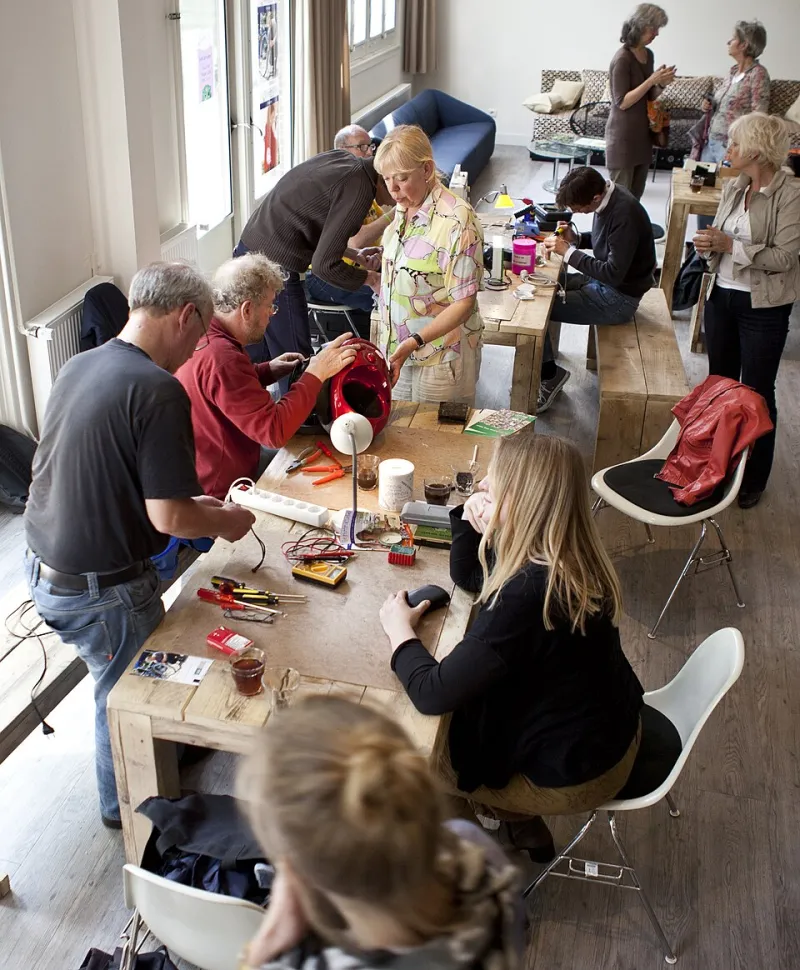
Photo: Ilvy Njiokiktjien, CC BY-SA 3.0, via Wikimedia Commons
The smell of solder and Victoria sponge
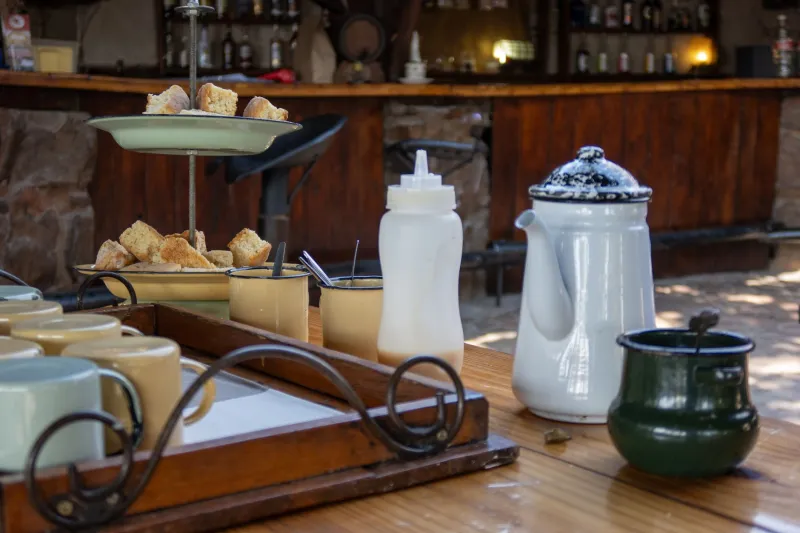
It is 9.45 on a Saturday morning and the church hall already smells of coffee, warm dust and the faint metallic tang of somebody soldering something they probably shouldn't be soldering indoors. A trestle table by the door holds a kettle, a clipboard and a plate of Victoria sponge with a note that says 'help yourself, 50p a slice'. This is not a shop. Nobody is trying to sell me a new toaster. This is the monthly repair café, and the queue is already out of the door.
The woman in front of me is holding a lamp like it is a sick pet. Behind her, a man has brought a radio in a carrier bag and a young couple are wrestling an air fryer through the double doors. A volunteer in a blue apron takes names, writes 'kettle, broken switch' on a clipboard and points towards the tea urn. It feels less like a service and more like a village hall production of a very practical play. There is a cast, a prompt, a props table and an audience of people hoping for a happy ending.
The kettle that came back from the dead
Pauline's kettle is first up. It is a sturdy stainless-steel thing that has boiled its last, or so she thinks. She has already looked at replacements online and got depressed by the prices. Dev, a retired electrical engineer with a multimeter and the calm manner of a man who has seen every kind of fuse, takes the kettle apart on a tea towel. The room goes quiet in that particular way rooms do when something small but important is happening.
He tests the switch. He tests the element. He mutters something about a thermal cut-out and rummages in a biscuit tin full of salvaged parts. Another volunteer, a woman called Sue who runs the textiles table, looks over and says she has a switch that might fit. There is a small cheer. Pauline puts her hand over her mouth. Dev fits the part, screws the base back on and hands the kettle to Pauline with a theatrical little bow.
She fills it at the sink. We all watch. It boils. It actually boils. The applause is not ironic. It is the sort of applause you get at a school nativity when the donkey finally arrives. Pauline says she will bring cake next month. Dev says she does not have to. Pauline says she absolutely will.
Regulars, first-timers and the Tupperware of doom
By 10.30 the hall is full. There is a table for electricals, one for textiles, one for bikes and a slightly chaotic corner for 'things that don't fit anywhere else'. A student is having a lamp rewired. A dad is learning how to clean the filter on his vacuum. Someone has brought a wooden clock that has not ticked since 2019. The volunteers do not promise miracles. They promise a look.
That is the thing about a repair café: it is not a magic wand. Some things cannot be saved. Some things need a part that nobody has. Some things are held together by hope, tape and a small fire risk. But the point is the trying. The point is that a broken thing gets a second opinion before it gets a bin bag.
What I had not expected was the regulars. People who come back even when nothing needs fixing. They bring biscuits. They bring spare plugs. They bring stories about the last thing they had repaired. A man called Terry tells me he has been coming for two years and has never actually brought anything. He just likes the atmosphere. 'It's the only place I can talk about capacitors without someone's eyes glazing over,' he says. A woman at the next table nods and passes him a custard cream.
Why it matters beyond the bin
There is a lot of talk in 2026 about everyday sustainability. Most of it is aimed at us in the form of guilt: the wrong packaging, the wrong car, the wrong kettle. What I like about the repair café is that it makes sustainability feel like a Saturday morning rather than a lecture. It is not about being perfect. It is about not throwing away a perfectly good lamp because of a two-pound switch.
The cost-of-living angle is obvious, but it is not the whole story. There is something quietly rebellious about sitting in a church hall while a stranger teaches you how to take apart a toaster. It is slow. It is analogue. It is the opposite of a website telling you that your old thing is obsolete. And it is social. You cannot repair a kettle in silence for an hour without eventually talking to the person next to you.
How to find your nearest repair café in 2026
If you fancy taking something along, here is the practical bit. Search the Repair Café Foundation map and the Restart Project's listings for your area. Check local library noticeboards, Transition Town newsletters, church hall posters and council waste pages. Many repair cafés now have Facebook groups or mailing lists, which is where they post dates and any booking rules. Some are drop-in. Some ask you to book a slot. Some only do electricals or textiles, so check before you lug a bike up a flight of stairs.
Bring your item, any spare parts you already have, a small donation if you can and a bit of patience. Expect to wait. Expect to learn something. Do not expect every repair to work. If you are bringing something with a plug, check whether the volunteers do PAT testing or safety checks, and be honest about what is wrong with it. 'It just stopped' is a useful start, but 'it sparked and smelled like burning' is even more useful.
The bit where the kettle sings
By noon, Pauline's kettle is on the tea table, doing the thing kettles do. The air fryer has been declared beyond saving, but the couple are leaving with a phone number for someone who might have the part. The lamp is glowing. The radio is making a noise that might be Radio 4 or might be interference. Nobody minds. The cake plate is empty.
As I leave, Dev is showing a teenager how to use a multimeter. Terry is explaining the difference between two types of fuse to a woman who did not ask. Sue is stitching a hole in a coat while giving advice on a broken zip. It is not glamorous. It is not going viral. But it is happening, every month, in halls and libraries and community centres across the country. And somewhere in the middle of it, a kettle is singing.