The Courgette Economy: A Weekend Among Britain’s Front-Garden Stalls
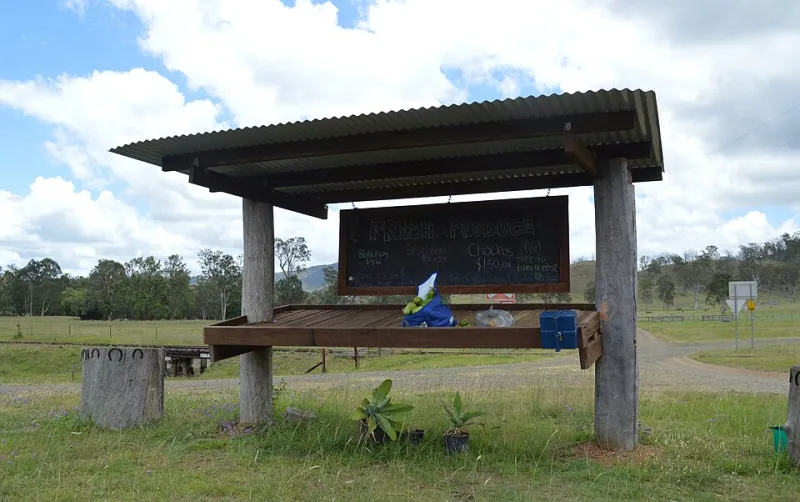
Photo: Mattinbgn (talk · contribs), CC BY 3.0, via Wikimedia Commons
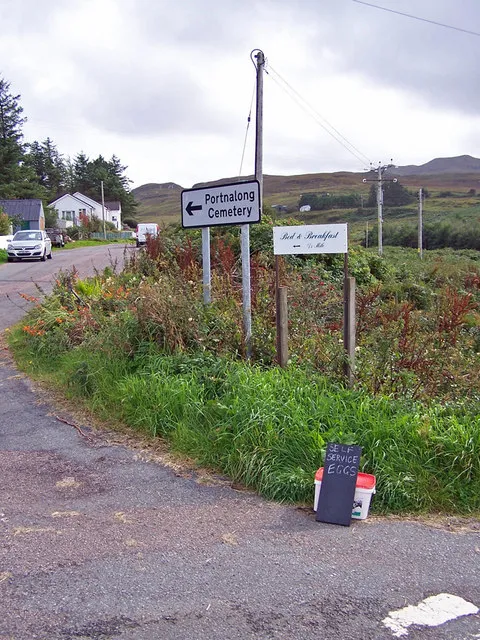
The first box I found was a wooden crate balanced on a garden wall in Somerset, with a hand-painted sign that read: 'Eggs £2.50. Courgettes free to a good home. Please don't ring the bell — baby asleep.' Beside it, a rusted biscuit tin with a slit cut into the lid. No camera. No card reader. Just a tub of coins and a hope that people are decent.
I spent last weekend driving between six front-garden honesty boxes — from a shed in Wiltshire to a windowsill in Norfolk, via a rickety table in the Peak District and a plastic tub in a Yorkshire dale. The brief was simple: buy something from each, talk to whoever stocked it, and see what the biscuit-tin economy tells us about trust in 2026. I came home with three courgettes, a jar of marmalade, a bunch of mint cuttings and a mild sense of optimism.
The tin that never lies
Every box has a tin. Sometimes it's a proper biscuit tin — Crawford's, usually, with a faded picture of a shortbread finger. Sometimes it's an ice-cream tub, or a jam jar with a slot hacked into the lid. The tin is the bank, the confession box and the conversation piece all at once.
'People are mostly honest,' says Margaret, 68, who runs a stall outside her cottage in Wiltshire. 'You get the odd one who takes the eggs and leaves a note saying they'll pay next time. Sometimes they do. Sometimes they don't. But I'd say ninety-five per cent of people are straight as a die.' She keeps a notebook beside the tin, not to catch anyone out, but because she likes reading the messages: 'Back tomorrow for more jam — left £5, keep the change.' 'Lovely sprouts. Sorry I only had a tenner.' 'Your cat sat on my car. No charge.'
The tin is rarely locked. Margaret admits she's had a couple of £10 notes go missing over the years, but she's also found extra coins tucked under the lid with a note: 'Saw your sign was blown over — bought two lots.' It's a system that runs on an honour code so old it predates contactless.
What sells and what walks
The rules of supply and demand are different at a front-garden stall. Courgettes are the great glut of the British summer — by August, everyone with an allotment is trying to offload them. 'I can't give them away,' laughs Tom, who stocks a box in the Peak District. 'But put a sign saying free and people take three. Put a sign saying 50p each and they take five. It's psychology.'
Jam sells. Chutney sells. Eggs sell, if you can get them. Plant cuttings — mint, rosemary, strawberry runners — vanish within hours. 'I put out six pots of mint on Saturday morning,' says Priya, who runs a stall in Norfolk. 'By lunchtime they were gone. One person left a note saying thank you, I've left a pound for the pot. Another left nothing. You take the rough with the smooth.'
What mysteriously disappears? Not money, usually. It's the small stuff: a single lemon from a bowl, a handful of runner beans, a tiny posy of sweet peas. 'I don't mind,' says Margaret. 'If someone's that desperate for a lemon, they probably need it more than me.' But she did once have a whole tray of eggs vanish. 'That stung. It wasn't the money — it was the cheek of it.'
The etiquette of exact change
There is an unspoken rulebook for honesty boxes, and it goes something like this: bring coins. Don't leave a £20 note for a 50p bunch of rhubarb. Don't take all the change. If you've only got a tenner, either buy more or leave a note. And never, ever ring the doorbell unless it's an emergency.
'I had a woman knock once because she wanted to pay by card,' says Tom. 'I said, it's a tin, love, not a till. She looked at me like I'd asked her to barter in goats.' He now has a small QR code taped to the table — 'for the younger ones' — but he still prefers the tin. 'There's something honest about cash. You can see it. You can count it. It doesn't disappear into the ether.'
The etiquette extends to what you leave behind. A note. A thank-you. A spare carrier bag. One stall in Devon has a help-yourself box of used egg cartons, and a sign that says: 'If you take a carton, leave a carton. It's not complicated.' It's the kind of small, civic-minded logic that makes Britain bearable.
Why the biscuit tin still says something hopeful
At a time when most of our transactions are invisible — tapped, swiped, logged — the honesty box is stubbornly physical. It asks you to look someone in the eye, even if they're not there. It trusts you to do the right thing, and most people do. That's not naïve. It's a daily, low-stakes referendum on human decency, and it keeps passing.
The last box I visited was in a Yorkshire dale, at dusk. A plastic tub of potatoes, a jar of homemade chutney, a tin with £3.20 in it. The sign said: 'Pay what you can. If you can't pay, take it anyway. We've all been there.' I left a pound for the chutney and a note that said: 'Thank you — the potatoes look lovely.'
I don't know if anyone read it. But the tin was still there the next morning, and so were the potatoes. In 2026, that feels like something worth writing down.